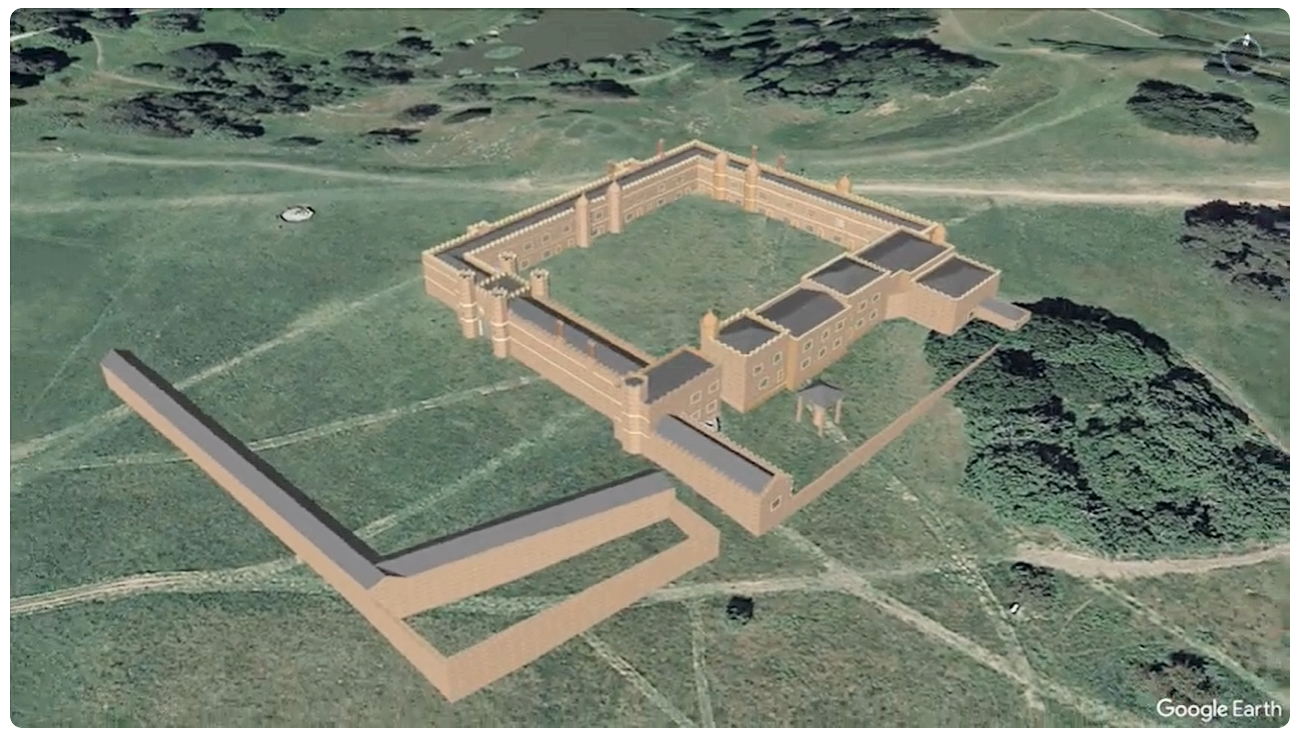
From the 14th century Ampthill Park was a royal lodge and hunting park. In the 15th century it was occupied by Sir John Cornwall, who had married the king's sister, Elizabeth of Lancaster, Duchess of Exeter. Sir John amassed a large fortune and constructed Ampthill Castle, a fortified house.
One of the features of Ampthill Park is Katherine’s Cross, erected in 1772 by Lord Ossory to commemorate Queen Catherine of Aragon, who was detained in “Ampthill Castle” while annulment proceedings of her marriage to King Henry Vlll were taking place in Dunstable. This society is trying to sort out a number of anomalies in the accepted story of this phase of our history. It is well known that a large Manor house was built in the park by Sir John Cornwall with ransom money gained from hostages taken at the battle of Agincourt 1415. The estate was bought by Edmond Grey of Wrest in 1454 but subsequently was forfeited to Henry Vll and it was in this house that Catherine was held by her husband Henry Vlll.
All visible structures have disappeared from the site but geophysical investigations by this Society in 2002 indicated a possible site for the Manor house with what appears to be a building within a large dry moat. However, it soon became apparent that the Castle which was surveyed in 1567 leaving plans annotated with full measurements, would not fit within the moat, and would overhang the natural scarp slope of the plateau. The Society’s survey, which was very complex, also showed a recto-linear feature further to the east and partially over the possible moat. The Castle’s 1567 plans fitted with the feature.
No historical record has been found of earlier building on this site but references within maintenance records of the manor imply that another building was in the area in the 1530’s. One quote is “mending of leads on the great tower standing on the west side of the manor”. Historical records are being pursued and pseudo-sections have been taken at strategic points. Obviously, this is a sensitive site with its royal connections.
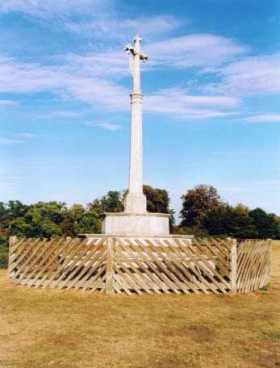
Katherine’s Cross, in Ampthill Park
A compehensive list of references, many of which are detailed below.
"Substantial house, built in the early 15th Century by Sir John Cornwall, consisting of 4 ranges round a central courtyard, with 2 further ranges of outbuildings round 2 sides of outer court. The property passed to Henry VIII in 1524 and was the residence of Katherine of Aragon during her divorce proceedings. By 1555 the house was reported to be in a state of decay, a ruin by 1605, and demolished by 1649. The site of the castle is now marked by the Katherine Cross."

Part 1. Resistance Survey of the area believed to be the site of Ampthill Castle in the County of Bedfordshire. TL026385
September 2002 & April 2003. Revised January 2011
Kevan J. Fadden, Michael J. B. Turner, Brian D. Lazelle
Part 2. Survey of Castle site using a Bartington 601 Gradiometer
September 2010
Clive Makin
Part 3. Summary of Albion Archaeology Excavation July 2018
Updated November 2023
Kevan Fadden FSA
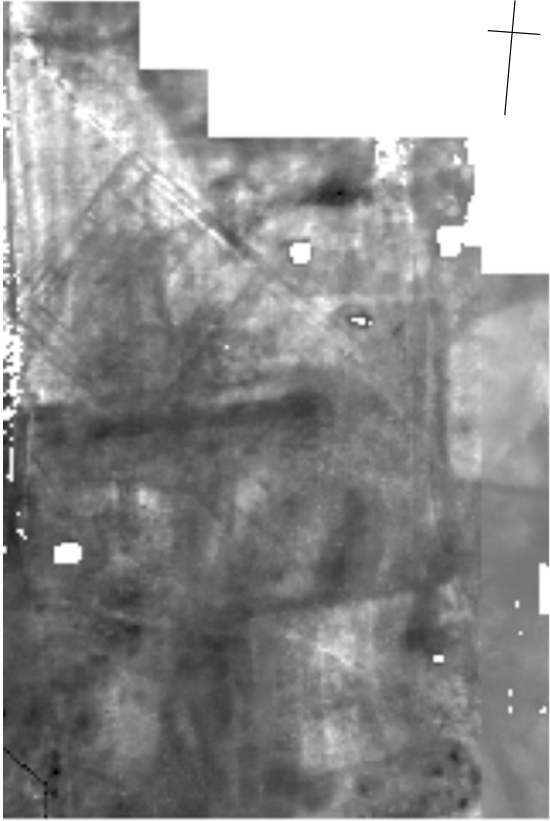
Resistance Survey
Pseudo-sections of selected areas of the original geophysical survey carried out on the area believed to be the site of Ampthill Castle.
Download report
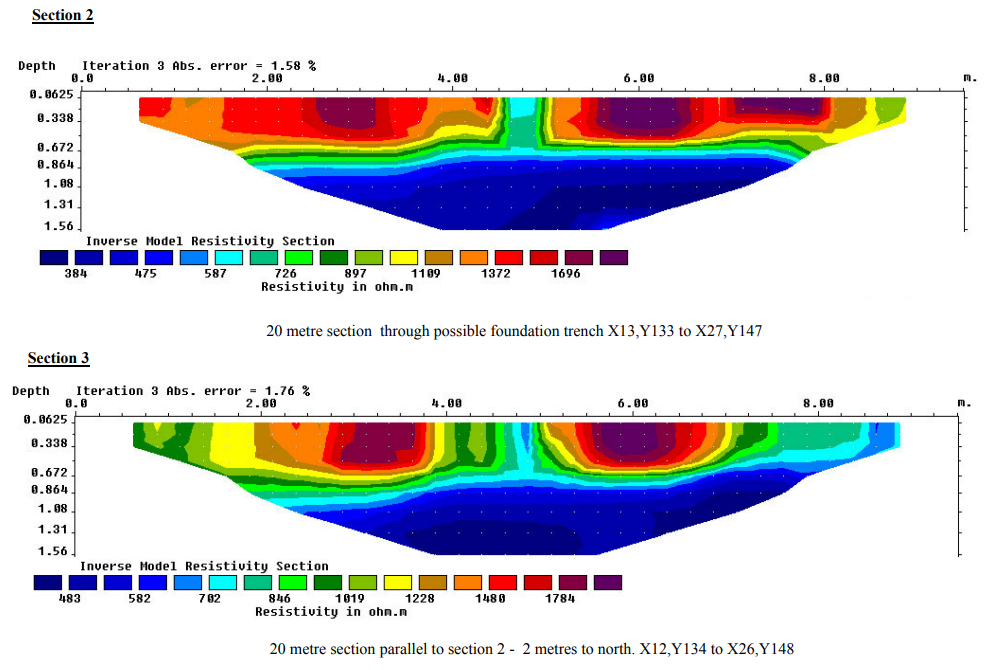
Pseudo Sections
Points to consider when comparing the ADALHS geophysics with the excavation by the Northampton Unit in Ampthill Park
Download report
The excavations were sponsored by Ampthill Town Council and The Greensand Trust with funding from Awards For All and English Heritage. The project was undertaken with the assistance of the Ampthill District Archaeological & Local History Society (ADALHS), The Greensand Trust and the local community. It was overseen by Northamptonshire Archaeology and managed by Central Bedfordshire Council Archaeologists.
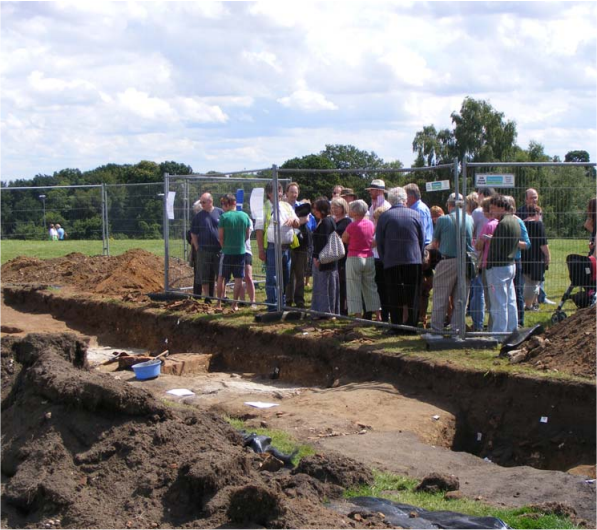
An alternative view of the orientation.
Download report
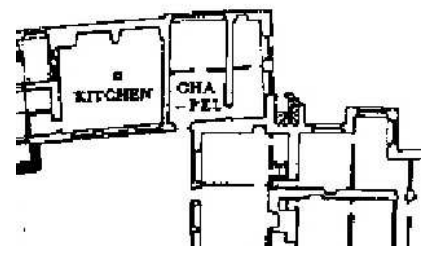
In 2014 Ampthill Town Council secured a ‘Parks for People’ (PfP) grant from the Heritage Lottery Fund (HLF) to restore Lancelot ‘Capability’ Brown landscape. The project also aimed at increasing the awareness of the park’s earlier heritage, and included a proposal for a community-led archaeological excavation. Albion Archaeology was commissioned to manage the community project.
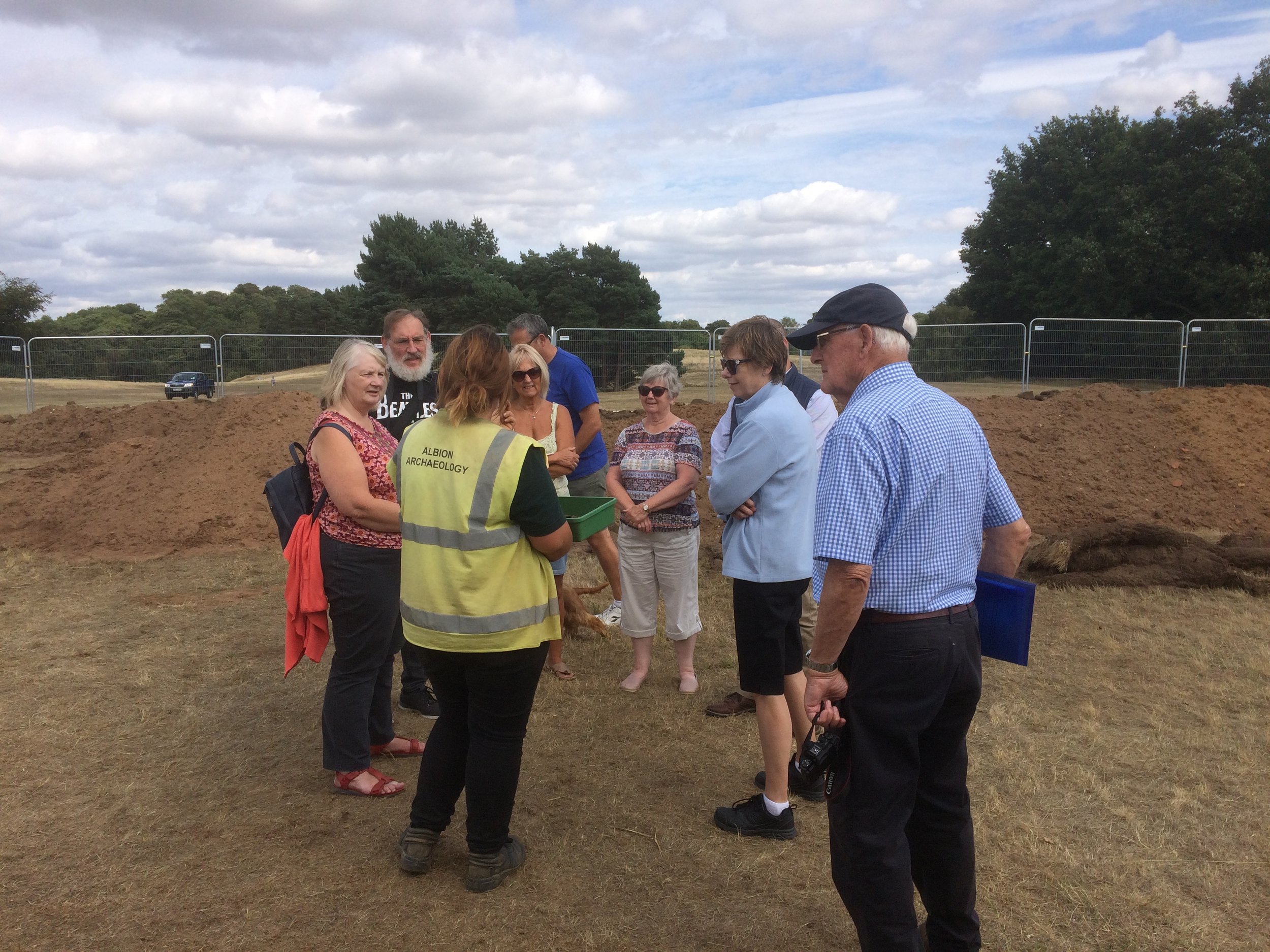
Members of the public were given tours by Albion Archaeology staff.
On the Reports page are the full transcripts of the original accounts of building works in the Great Park at Ampthill during the reign of Henry VIIIth. The accounts were found in the British Library, the Bodleian Libraries at the University of Oxford, the National Archives and the Manuscripts and Special Collections at the Hallward Library, University of Nottingham.
The accounts found so far yield monthly records of the work carried out, the people employed and their rate of pay and the days they worked including holidays and overtime. The expenditure and source of supplies and equipment required for the works are also given. Unfortunately many of the accounts have been lost but the number found gives a good idea of the work going on during the reign and after the death of the King.
The transcripts are in modern English as far as necessary. In some cases the documents had a few illegible areas and there were some words which were difficult to decipher and some where the modern equivalent is not certain.
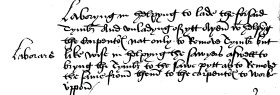
Part of the accounts for the Manor of Ampthill
Pages 40 - 47. Published 1982.
Download a facsimile

"Nothing now remains it, but an Elizabethan plan among the Cecil Papers at Hatfield House has recently been identified as a survey of Ampthill. The orientation is uncertain, for none is indicated on the original drawing."
T 271-2 & 267-8 Ground and upper floor plans, being designs for the alteration and enlargement of Ampthill, Beds. 1605.
Download a facsimile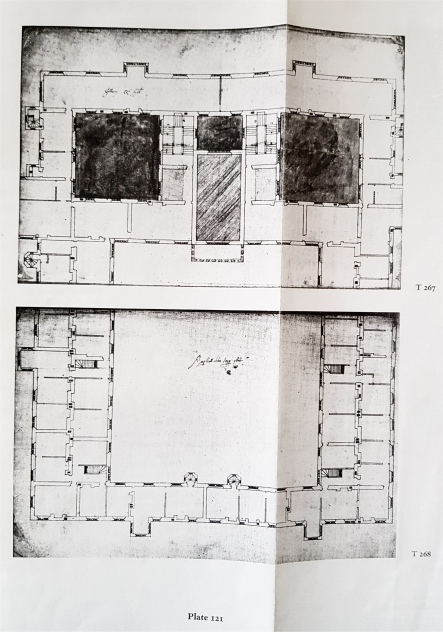
"When John Leland journeyed through Bedfordshire in the 1530s he described Ampthill Castle as being ‘on a hill with 4 or 5 stone towers in the inner ward as well as a lower courtyard.’ It had its own chapel with stained glass windows."
"Ampthill Park is celebrated as the residence of Queen Katherine at the period of her divorce. The site of the castle is well known."
Nos. 143 & 144 Ampthill, Bedfordshire. Hatfield House Archives.
Download a facsimile
"Plan of Ampthill House with proposals for partial rebuilding. Paper, 23¼x32½, with two flaps of different (thicker) paper. Pen with some pencil shading."
"Sketch-plan for a reconstruction of Ampthill House. Endorsed Draught of / Ampthill and 1605, and elsewhere, For Amptell. Pen and ink."
Published 1823.
Download a facsimile
"He (Sir John Cornwall) built a large House on this Estate, which, reverting to the crown, was granted by Edward IV. to Edmund, Lord Grey, of Rithin, afterwards created Earl of Kent. His grandson, Richard, third Earl of Kent, having much wasted his Estate, this mansion was made over to Henry VIII., whose palace it then became."
"Meanwhile Katherine was becoming more and more of an incubus to henry. She steadfastly refused to consider the idea of divorce, and finally was banished from the Court and sent from Hertfordshire to Ampthill Castle."
Download a facsimile
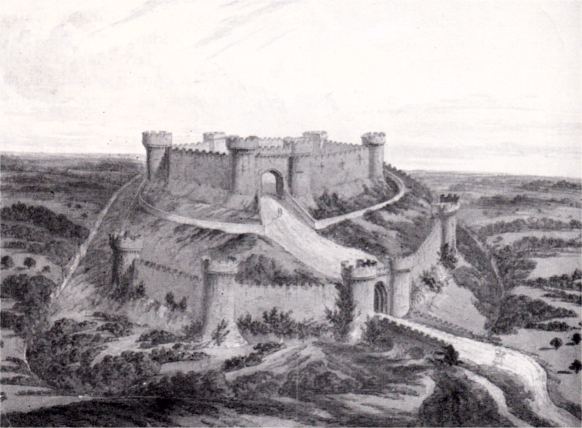
"An old watercolour drawing of Ampthill Castle as described by Leland, in Luton Museum collection."
"Catherine of Aragon's imprisonment at Ampthill Castle with its romantic overtones of gloom and desolation would immediately have appealed to the antiquarian in Horace Walpole on his various visits. The idea of a monument was evidently suggested by Walpole to Lord Ossory during his visit in June 1771."
Letters written by Horace Walpole to William Cole, the antiquarian, who died in 1782.
They were printed in the 'Monthly magazine' for 1803.
Download a facsimile
"In days of old here Ampthill's towers were seen,
The mournful refuge of an injur'd queen."
By Mary S. F. George.
Download a facsimile"'A man of great fame in outward warres and very rich', Sir John Cornewall, Knight of the Garter, later Lord Fanhope, brother-in-law of Henry IV and one of the heros of Agincourt, had close associations with fifteenth-century Bedfordshire."
Location of Ampthill Castle as proposed by the Chairman of ADALHS. 
Location of Ampthill Castle as proposed by Northamptonshire Archaeology.