English Heritage
English Heritage says 'Listing helps us acknowledge and understand our shared history. It marks and celebrates a building's special architectural and historic interest, and also brings it under the consideration of the planning system so that some thought will be taken about its future.'
'Listing is not a preservation order, preventing change. Listing is an identification stage where buildings are marked and celebrated as having exceptional architectural or historic special interest, before any planning stage which may decide a building's future.'
Definition
A listed building in the United Kingdom is a building that has been placed on the Statutory List of Buildings of Special Architectural or Historic Interest.
In order to be listed, a building must meet various criteria. The criteria for listing include architectural interest, historic interest and close historical associations with significant people or events. Buildings which are not individually noteworthy may still be listed if they form part of a group that is - for example, all the buildings in a square. This is called 'group value'. Sometimes large areas comprising many buildings may not justify listing but are given the looser protection of designation as a conservation area.
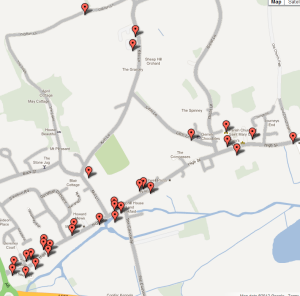 Listed Buildings in Clophill
Categories of Listed Buildings
Grade I buildings are of exceptional interest, sometimes considered to be internationally important; only 2.5% of listed buildings are Grade I.
Grade II* buildings are particularly important buildings of more than special interest; 5.5% of listed buildings are Grade II*.
Grade II buildings are nationally important and of special interest; 92% of all listed buildings are in this class and it is the most likely grade of listing for a home owner.
